
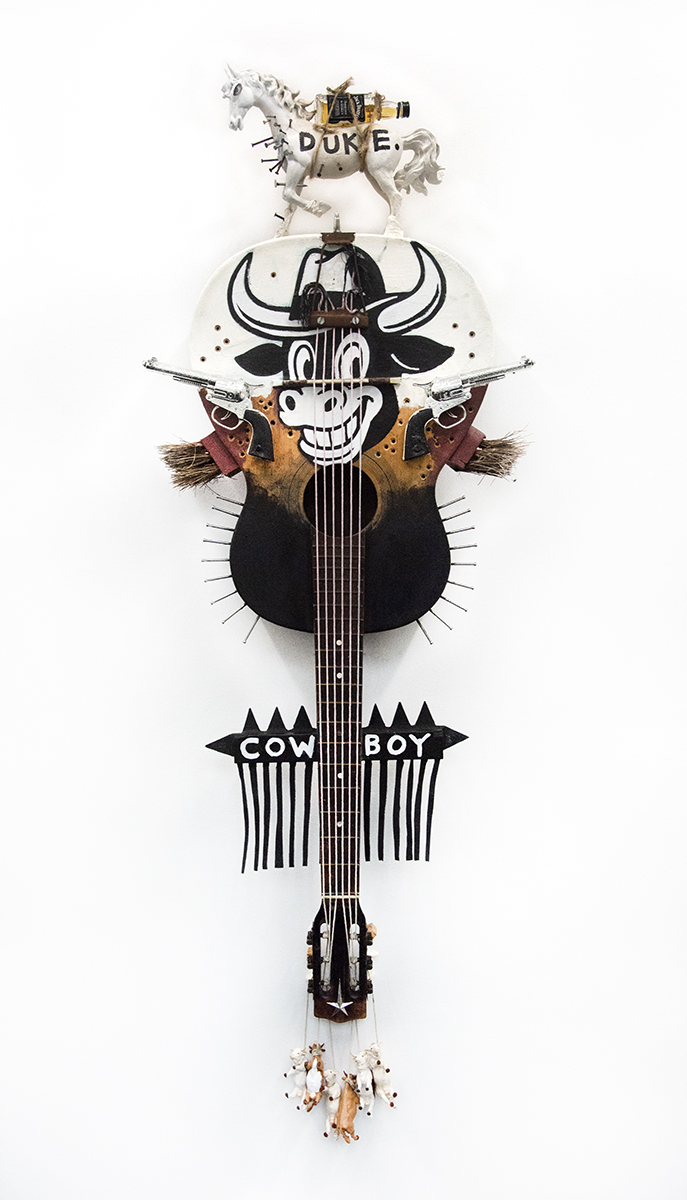
Oil, emulsion, acrylic, paint pens, nails, string, whisky miniature, brush head, plastic star and faux leather on model horse, wood, guitar and plastic toy cows
136x48x14cm
Cowboy Builder is a series of provocative sculptural works that fuse cultural mythology with socio-political critique. Constructed entirely from salvaged and discarded materials, the artworks explore the duality embedded in the word “cowboy.”
On one side, it draws from the romanticized imagery of the American cowboy—cinematic hero, frontier rebel, rugged individualist—embodying myths of freedom, masculinity, and national identity. On the other, it confronts the British colloquialism “cowboy builder,”—a figure of unreliability, cutting corners, and dubious integrity. In this tension, the Cowboy Builder series becomes a metaphor for the thin line between authenticity and performance. Through this layered reference, the sculptures invite viewers to examine notions of trust, labor, authenticity, and myth-making.
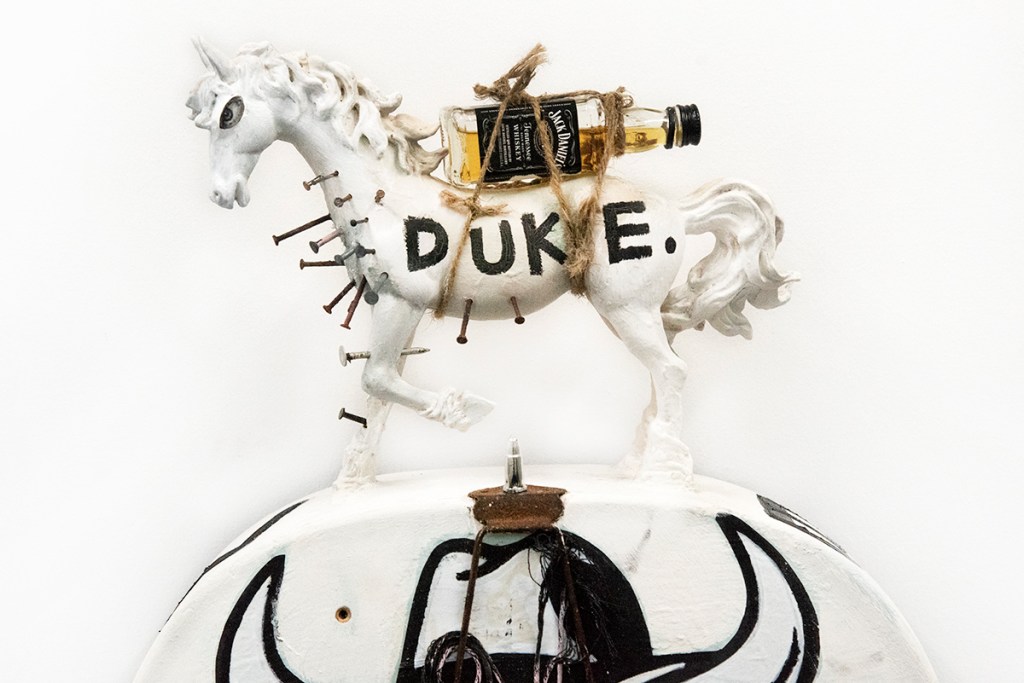
By using discarded materials as symbols of waste and obsolescence—the artist challenges both the glossy veneer of Hollywood Westerns and the facade of professional competence. Each sculpture teeters between icon and impostor, hero and hack, construction and collapse.
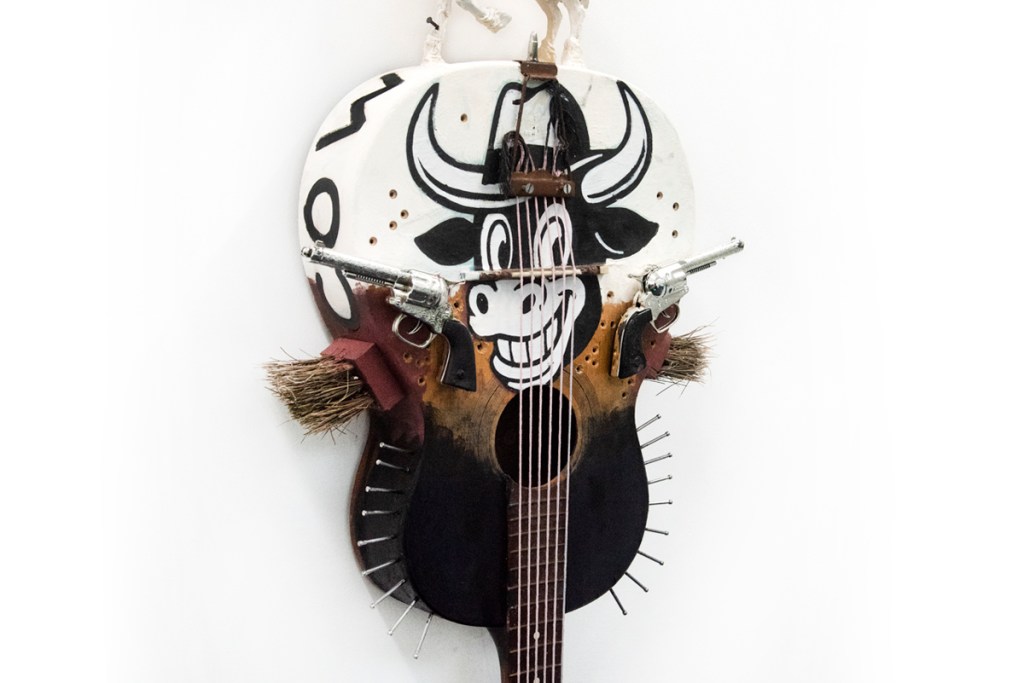
Cowboy Builder II takes on the form of a symmetrical assemblage of objects tied to eachother. At its centre a cartoon bull that could just as easily belong on a fast-food bag as a gun-range target. It anchors the composition between consumerism and violence, nostalgia and exploitation. The half-burnt guitar, with its strings lassoing small plastic cows, alludes to classic cowboy ballads and country songs, where solitude, heartbreak, and grit are romanticized…
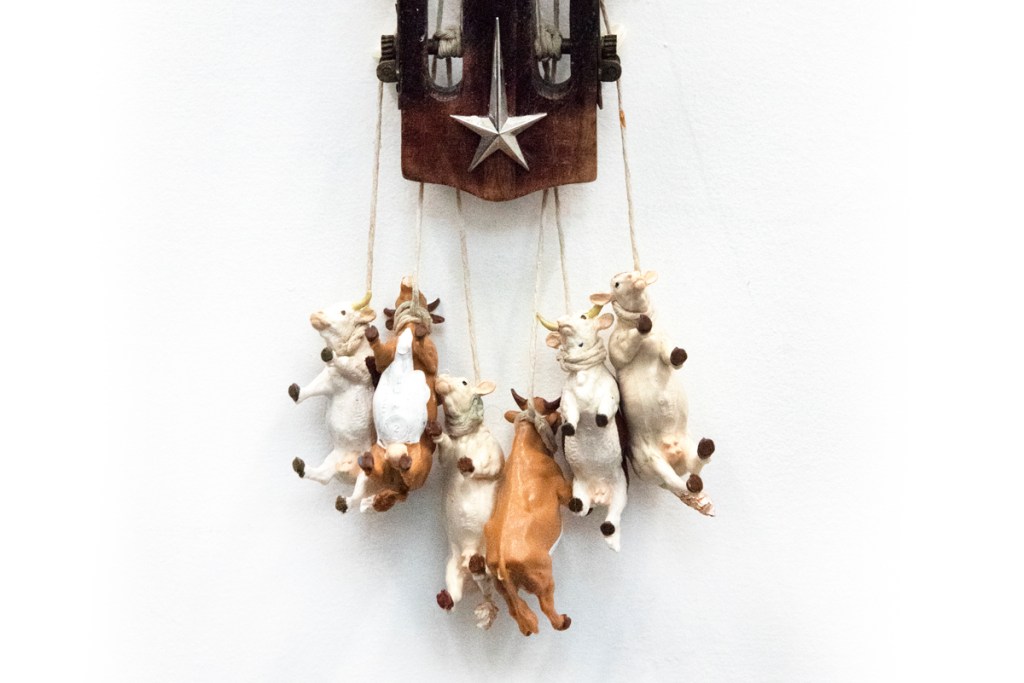
…But it also parallels the figure of the artist: often idealised as a lone wanderer, misunderstood yet revered, a maker of meaning in a world that resists repair. Like cowboys, artists have been granted a kind of heroic status, freedom-bound, risk-taking, and outside the rules of polite society—while often navigating precarity, doubt, and marginalisation. Together, these elements reinforce the sculpture’s uneasy balance between myth and materiality, constructing a tableau in which desire, labour, and decay orbit one another in perpetual tension.
The use of cheap plastic toys underscores the plasticification of our natural world, where symbols of freedom and vitality are reconfigured as brittle and mass-produced.
 Duke Mitchell