
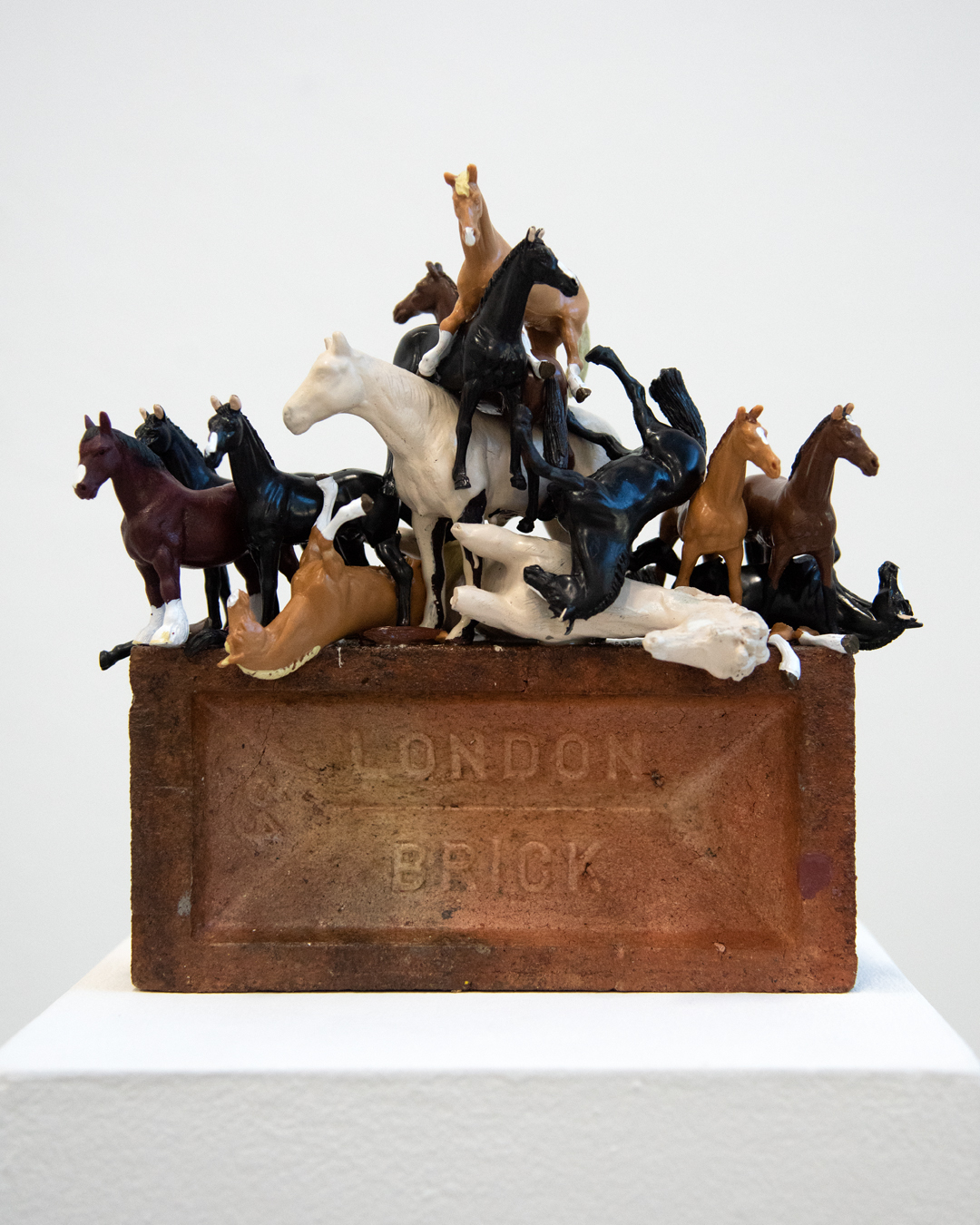
Plastic toy horses on brick
26x25x11cm
Cowboy Builder is a series of provocative sculptural works that fuse cultural mythology with socio-political critique. Constructed entirely from salvaged and discarded materials, the artworks explore the duality embedded in the word “cowboy.”
On one side, it draws from the romanticized imagery of the American cowboy—cinematic hero, frontier rebel, rugged individualist—embodying myths of freedom, masculinity, and national identity. On the other, it confronts the British colloquialism “cowboy builder,”—a figure of unreliability, cutting corners, and dubious integrity. In this tension, the Cowboy Builder series becomes a metaphor for the thin line between authenticity and performance. Through this layered reference, the sculptures invite viewers to examine notions of trust, labor, authenticity, and myth-making.
By using discarded materials as symbols of waste and obsolescence—the artist challenges both the glossy veneer of Hollywood Westerns and the facade of professional competence. Each sculpture teeters between icon and impostor, hero and hack, construction and collapse. They ultimately question who we allow to build—literally and figuratively—our homes, our histories, and our identities, and at what cost.
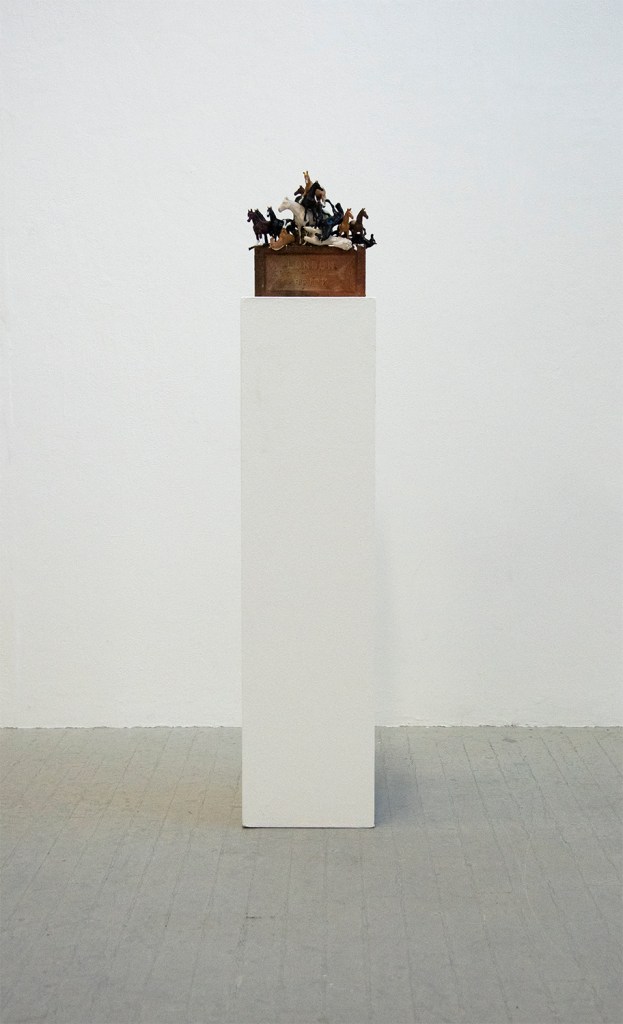
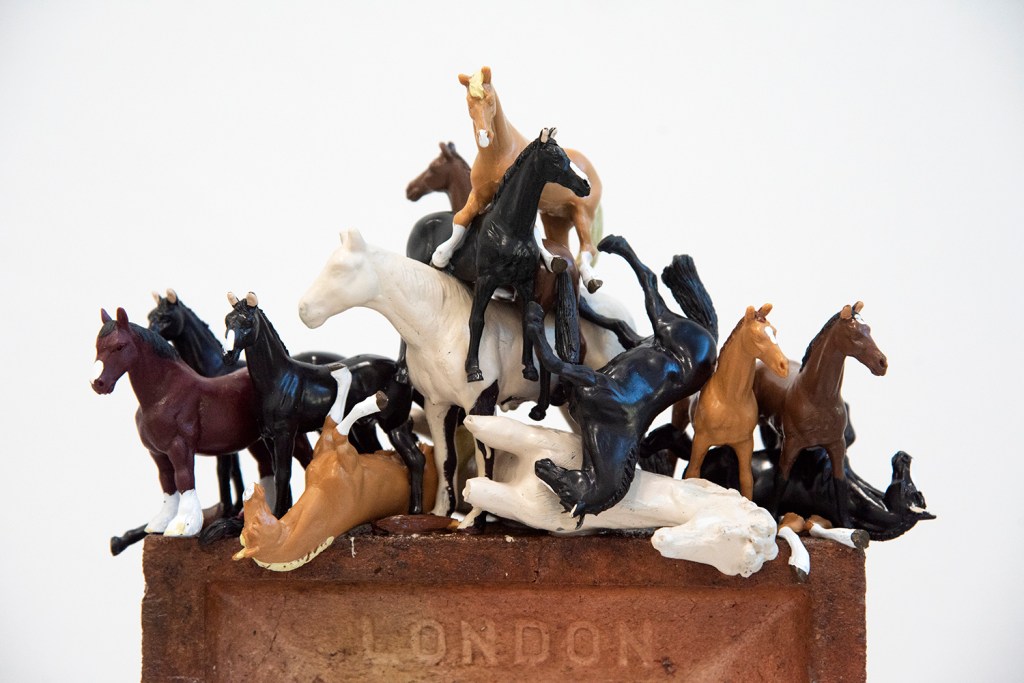
Cowboy Builder I, transforms a single red house brick into a fragile stage for a herd of small plastic horses. The brick, a humble yet loaded fragment of the housing market, doubles as both foundation and raft—simultaneously solid and yet not enough. In this way, the sculpture points to dangerous migrant crossings on overcrowded boats, as well as the shrinking habitats and ecological crises symbolised like a group of penguins adrift on a melting iceberg, clinging to what little space remains. This precarious scene becomes a metaphor for the pressures of an economic system that demands constant growth while leaving more and more to survive on less and less.
The use of cheap plastic toys underscores the plasticification of our natural world, where symbols of freedom and vitality are reconfigured as brittle and mass-produced—arranged like figures on a war memorial plinth. Some stand stoically and upright with dignity; others clamber over fallen bodies and twisted limbs, recalling the harrowing imagery of Goya’s Disasters of War (1820), Delacroix’s Liberty Leading the People (1830), or Picasso’s Guernica (1937). Through this layering of references, the sculpture connects everyday detritus to centuries of visual testimony about suffering, resilience, and the failures of power.

 Duke Mitchell